Sea Vegetable | Vegan Vegetarian Gluten Free Low Calorie

Hijiki Seaweed

Sargassum fusiforme Allergen-Free
Hijiki Seaweed

Sourcing & Taxonomy

  • Family Sargassaceae
  • Primary Cuisine East Asian (Japanese)
  • Seasonality Year-Round (harvested)
  • Source Marine Algae

The Forktionary Angle

"Its unique texture and deep umami make it a powerful yet often overlooked element in macrobiotic cooking."

Definition

A dark, savory sea vegetable with a distinctive firm texture, commonly used in Japanese cuisine.

Sensory Profile

TasteUmami, Salty, Marine
TextureFirm, Chewy, Slightly Crunchy
AromaOceanic, Briny
AcidityLow

Technical Metrics

Culinary Use

Simmered dishes, salads

Preparation Method

Rehydrates ~5x its dry volume

Primary Mineral Richness

High in Calcium, Iron

Nutrition Facts

Per 10g (dry)
Calories207 kcal
Total Fat0.3 g
Saturated Fat0.1 g
Trans Fat0 g
Cholesterol0 mg
Protein11.5 g
Total Carbohydrate44 g
Dietary Fiber42 g
Total Sugars0 g
Calcium1400 mg
Iron2.9 mg
Potassium1200 mg

Chef’s Secret

Always rehydrate hijiki in cold water for at least 15-20 minutes, then rinse thoroughly to remove excess salt and grit. Cook thoroughly; do not consume raw.

Substitutions

Best Match

Wakame Seaweed

1:1

Milder taste but similar texture and marine qualities, rehydrates well.

Arame Seaweed

1:1

Softer, lacier texture with a milder flavor profile, also a good fiber source.

Kombu Seaweed

1:2 (less)

Dried Shiitake Mushrooms

1:1 (rehydrated)

Offers a strong umami depth and chewy texture, but lacks marine flavor.

Buying Guide

Buy dried hijiki that is dark, uniform in color. Store in a cool, dry place.
Flavor Pairings

Simmered dishes (nimono) Salads Soups Rice Dishes Stir-fries

Recipes Using Hijiki Seaweed

Preparation Vegetables Time To Make Soups Stews

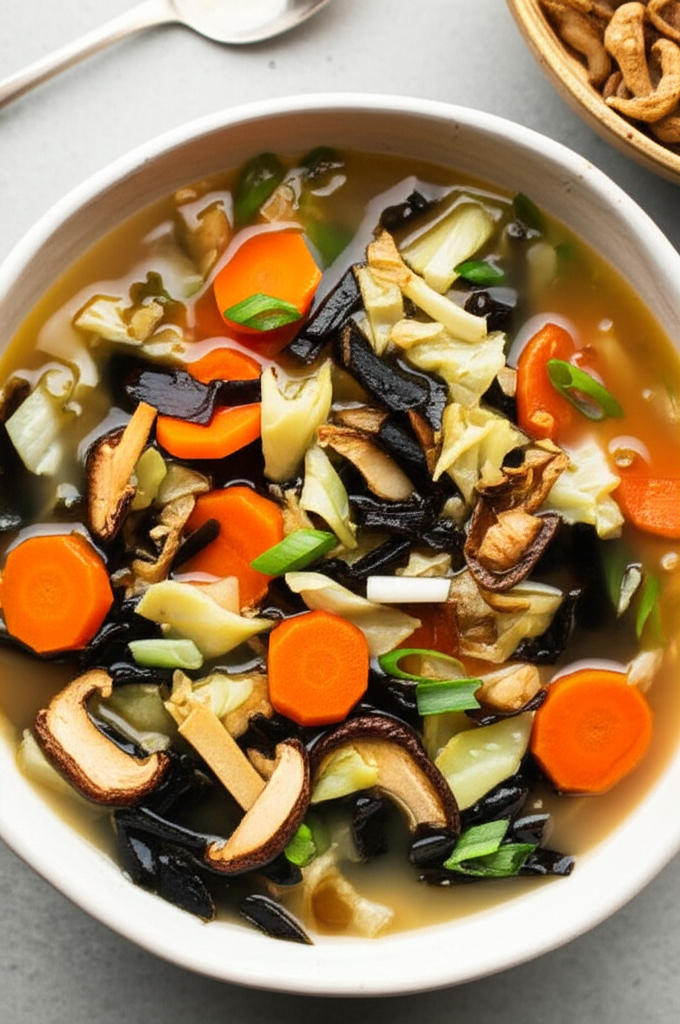
Asian Cabbage Soup

Warm up with this deeply flavorful Asian Cabbage Soup! Slowly caramelized onions and tons of garlic create a rich base, enhanced by a savory mushroom broth. This hearty, thick soup is bursting with fresh vegetables and a subtle umami depth. A touch of toasted sesame oil (optional) adds a delightful finishing touch. Adapted from the Moosewood Restaurant New Classics Cookbook.

See Complete Recipe