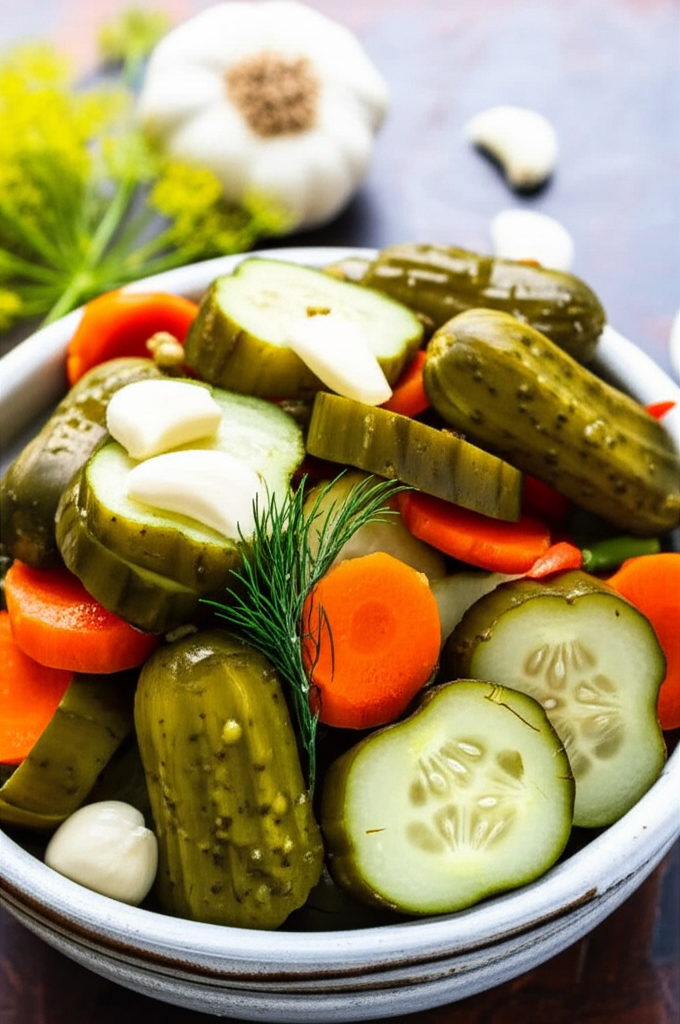
What Is Pickling Salt?
A pure, fine-grained salt, free of anti-caking agents and iodine, specifically designed for pickling and brining to prevent cloudiness and discoloration.
"Unlocking the Science of Salty Preservation."
What Does Pickling Salt Taste Like?
Pure Salty, Mineral
- Taste
- Salty
- Texture
- Fine Crystalline
- Aroma
- Odorless
- Acidity
- Neutral
Technical Metrics
Common Usage
1 cup per gallon of water for standard pickling brine
Scientific Fact
Lacks iodine and anti-caking agents that can cloud brine
Storage Tip
Store in an airtight container to prevent clumping
Nutrition Facts
Per 0.25 tsp (1.5g)Chef’s Secret
When substituting pickling salt with kosher salt, always measure by weight, not volume, as crystal sizes differ significantly.
Pickling Salt Substitutes & Ratios
The best substitute for Pickling Salt is Kosher Salt, used at a 1:1 by weight ratio. Pure salt, free of iodine and anti-caking agents, making it suitable for most pickling.
| Substitute | Ratio | Best for |
|---|---|---|
| Kosher Salt Best | 1:1 by weight | Pure salt, free of iodine and anti-caking agents, making it suitable for most pickling. |
| Sea Salt (fine grain, uniodized) | 1:1 by weight | Uniodized fine sea salt works well, ensure no anti-caking agents are present. |
| Regular Table Salt | N/A | Not recommended due to iodine and anti-caking agents which can discolor or cloud pickles. |
How to Choose & Store Pickling Salt
Ensure it's labeled "pickling salt" or "canning salt" to guarantee absence of additives.
What Pairs Well With Pickling Salt?
- Pickles
- sauerkraut
- brined meats
- fermented vegetables.
Frequently Asked Questions
What does Pickling Salt taste like?
Pure Salty, Mineral Odorless
What is a good substitute for Pickling Salt?
The best substitute is Kosher Salt (1:1 by weight). Pure salt, free of iodine and anti-caking agents, making it suitable for most pickling.
How do you choose and store Pickling Salt?
Ensure it's labeled "pickling salt" or "canning salt" to guarantee absence of additives.