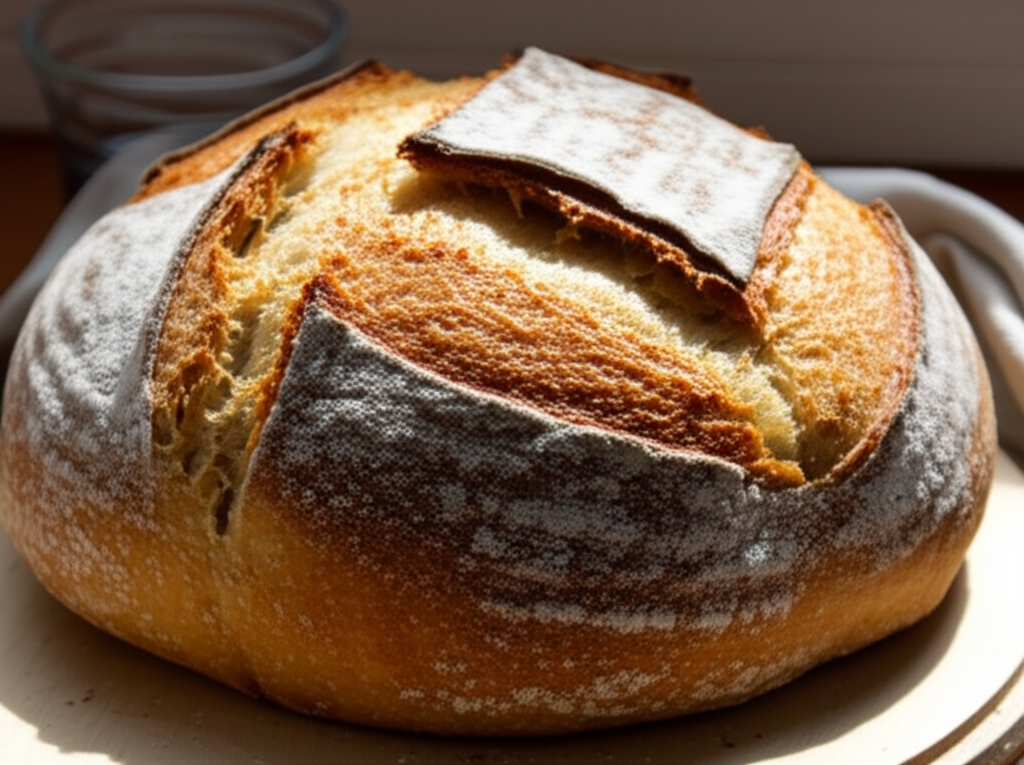
Ingredients for Biga
- 3 teaspoons active dry yeast
- 2 1/2 cups warm water
- 2 1/2 cups water
- 5 3/4 cups unbleached all-purpose flour
- 1 tablespoon salt
- 1 tablespoon olive oil
Cook Smarter with Sous, Your Kitchen Companion
Missing an ingredient for this Biga? Need a perfect wine pairing or a healthy side dish idea? Don't guess—ask Sous! Your AI-powered sous-chef is ready to help you swap ingredients, adjust serving sizes, and discover flavor tips in seconds.
How to Make Biga
- Day 1: In a medium bowl, combine 1 cup of yesterday's Biga (or sourdough starter), 2 cups all-purpose flour, and 1 cup lukewarm water. Mix until a shaggy dough forms.
- Cover the bowl and let the Biga ferment at room temperature (ideally 70-75°F) for 12-18 hours, or until doubled in size and bubbly.
- Day 2: In a large bowl, combine the fermented Biga, 3 cups all-purpose flour, 1 1/2 cups lukewarm water, 1 1/2 teaspoons salt. Mix thoroughly to form a dough.
- Knead the dough for 8-10 minutes until smooth and elastic. Add a tablespoon of olive oil to the dough while kneading to promote elasticity and richness
- Place the dough in a lightly oiled bowl, turning to coat. Cover and let rise in a warm place for 2-3 hours, or until doubled in size.
- Gently shape the dough into a round or oval loaf.
- Place the loaf in a well-floured banneton or bowl, seam-side up. Cover and let rise for another 1 hour, or until almost doubled.
- Preheat oven to 450°F (232°C) with a Dutch oven inside for at least 30 minutes.
- Carefully remove the hot Dutch oven from the oven. Transfer the dough from the banneton into the Dutch oven.
- Score the top of the loaf with a sharp knife or lame.
- Cover the Dutch oven and bake for 30 minutes.
- Remove the lid and bake for another 15 minutes, or until the crust is deeply golden brown and the internal temperature reaches 200-210°F (93-99°C).
- Remove from the oven and let cool completely on a wire rack before slicing and serving.
Nutrition Information (Approximate per serving)
Sodium
0 g
Sugar
1g
Fat
0g
Carbs
29g