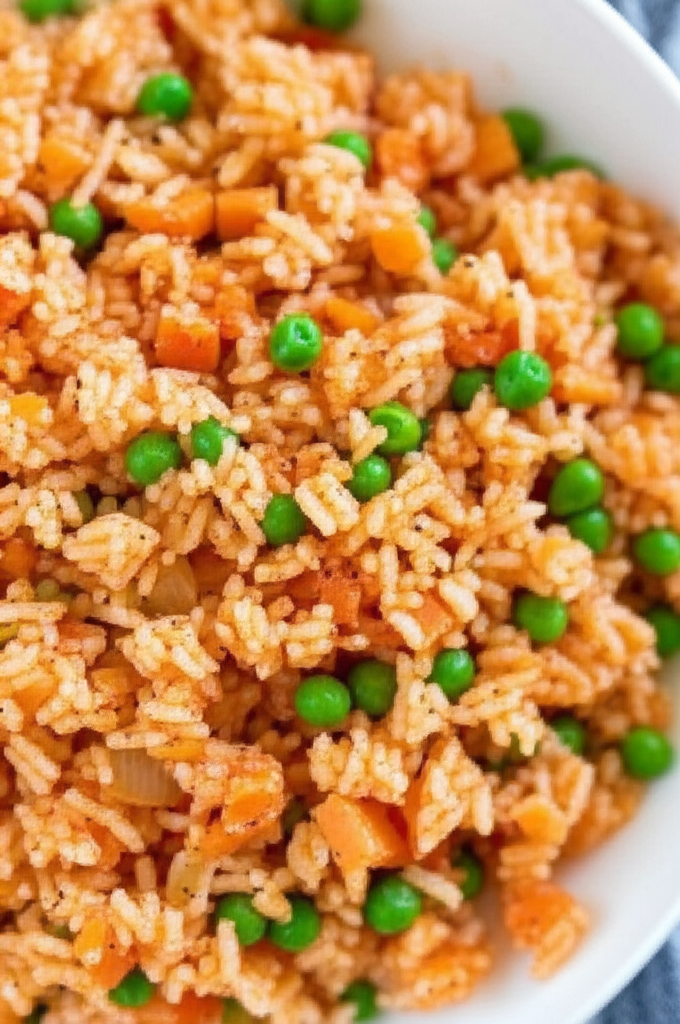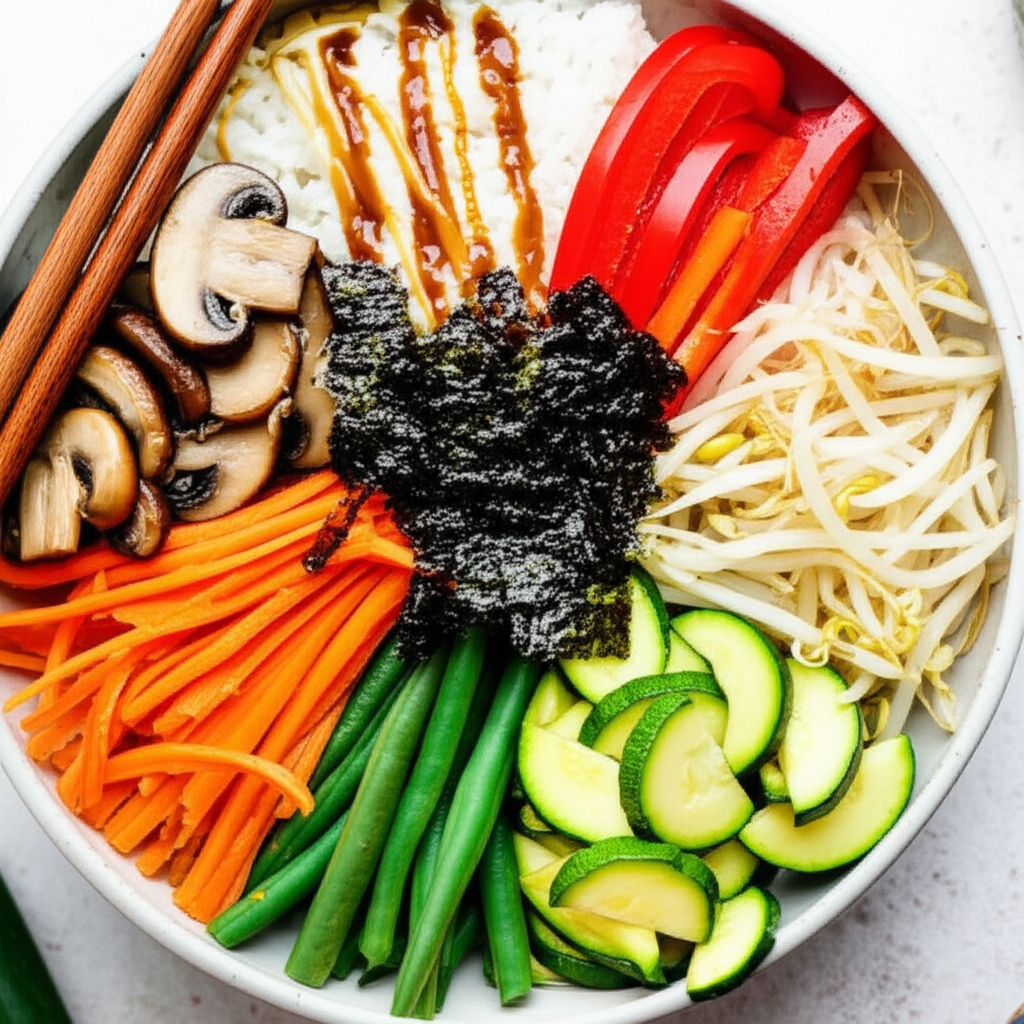
Ingredients for Bibimbop
- Cooked White Rice
- 1 cup thinly sliced mushrooms
- Green Beans
- 2 tablespoons vegetable oil
- Carrot
- Red Bell Pepper
- 1 cup julienned zucchini
- Mung Bean Sprouts
- Scallions
- Nori
- Asian Chili Sauce
- Dark Sesame Oil
- Salt
- Eggs
Cook Smarter with Sous, Your Kitchen Companion
Missing an ingredient for this Bibimbop? Need a perfect wine pairing or a healthy side dish idea? Don't guess—ask Sous! Your AI-powered sous-chef is ready to help you swap ingredients, adjust serving sizes, and discover flavor tips in seconds.
How to Make Bibimbop
- Cook the rice according to package directions. Fluff with a fork and set aside.
- If using pork, thinly slice 6 ounces of pork and saute in 1 tablespoon of sesame oil until browned and cooked through. Set aside.
- In a large bowl, whisk together 2 tablespoons soy sauce, 1 tablespoon gochujang (Korean chili paste), 1 tablespoon brown sugar, 1 teaspoon sesame oil, and 1/2 teaspoon garlic powder.
- Prepare the vegetables: thinly slice 1 cup carrots, julienne 1 cup zucchini, thinly slice 1 cup mushrooms, and chop 1/2 cup spinach. You can add other vegetables like bell peppers or bean sprouts.
- In a wok or large skillet, heat 2 tablespoons of vegetable oil over medium-high heat. Add the carrots, zucchini, and mushrooms; stir-fry for 3-5 minutes until slightly tender-crisp.
- Add the spinach and stir-fry for another minute until wilted.
- Pour the soy sauce mixture over the vegetables and stir to combine. Cook for 1-2 minutes until the sauce thickens slightly.
- If using, add the cooked pork to the vegetables and stir to combine.
- To assemble the Bibimbop, divide the cooked rice among bowls. Top with the vegetable and pork mixture.
- Garnish with a fried egg (optional), a sprinkle of sesame seeds, and a drizzle of gochujang (optional).
Nutrition Information (Approximate per serving)
Sodium
3 g
Sugar
16g
Fat
8g
Carbs
15g